


The Fifth Floor
Director: David Baeumler
Crew:Writer: David Baeumler. Producer: David Baeumler. Sound Design & Score: David Baeumler; Editing: David Baeumler
Email:davebfilm@gmail.com
Synopsis
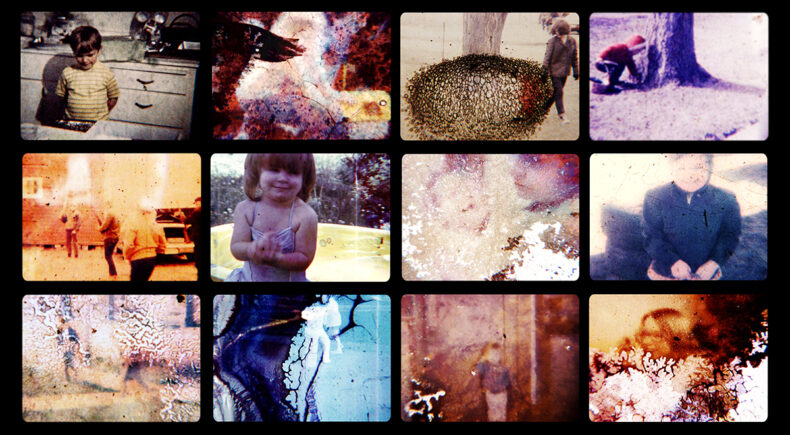
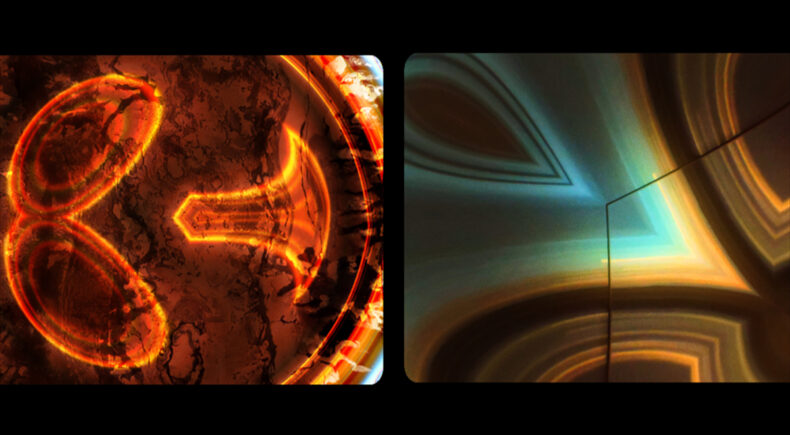
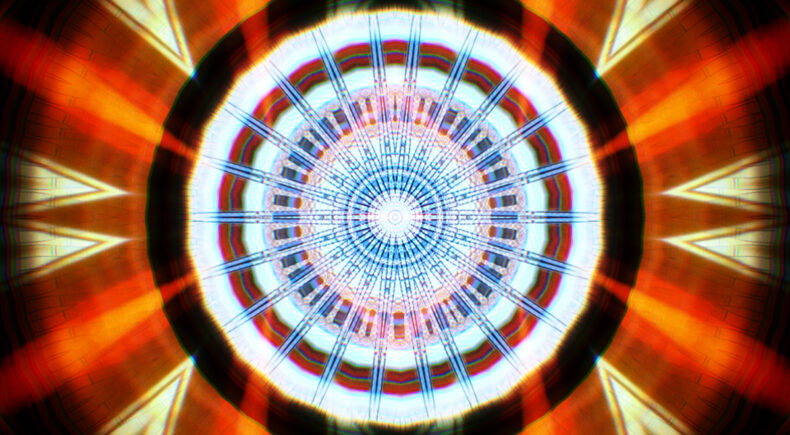
The Fifth Floor is an ascent. It takes us on a journey through layered imagery that includes 8mm home movies decayed by time, luminous kaleidoscopic patterns, and sacred geometry. The two visual worlds compete and collide. Moments of clarity dissolve. Ultimately it becomes a meditation on the beauty of loss, decay, and transcendence.
Structured as an elevator ride through an interior landscape, The Fifth Floor invites audiences to bring their own map. Whether it evokes stages of grief, meditation, therapy, or spiritual awakening the elevator will rise and the doors will open. Where you arrive depends on what you bring with you.
Trailer
About the director
David Baeumler is an artist working in moving image whose films blend experimental collage, found footage, and digital interventions to explore memory, perception, and existential uncertainty. Across a body of work spanning nearly three decades, his films return again and again to questions of identity, disconnection, and what might be called ontological vertigo: the feeling of the ground shifting beneath what we thought we knew about ourselves and the world.
His work has screened at festivals and galleries around the world including: International Film Festival Rotterdam, Anthology Film Archives, Vienna Shorts, the Biennale of Sydney, the Biennial of Moving Images Geneva, and the Albright-Knox Art Gallery. He studied filmmaking at Bard College. The Fifth Floor deepens his long engagement with found footage and the materiality of film, while exploring new digital video techniques.
Filmmaker's note
The year before I made this film, I was struggling with depression. And while I had been practicing meditation for years, my mind kept locking into cycles of rumination with dark, repetitive loops that felt impossible to break. Sometimes a moment of clarity would arrive but I couldn’t hold onto it. That back and forth between despair and insight became the emotional blueprint for The Fifth Floor.
The visual language began with two unlikely discoveries. The first was the decision to digitize my wife’s collection of her family’s old 8mm home movies. The reels had spent decades in basements and attics. When I finally had them transferred, I wasn’t sure they’d survive a projector. What came back stunned me. Some reels had deteriorated into pure abstraction: swirls and textures that looked like paint on film. Others were more recognizable: Easter egg hunts, family gatherings. But even these would flicker without warning into an oblivion of chemical decay. The memories of our lives being destroyed by time.
The second discovery happened in an elevator in Boston. One wall was glass that looked out into a courtyard strung with lights. The reflections in the metal door danced beautifully, so I took a short video on my phone. Back home, I manipulated the footage until it became luminous and otherworldly. That’s when the film revealed itself. The decayed home movies could represent ruminations of the mind trapped in the past. The abstract light could represent flashes of clarity. And the elevator ride could hold the whole thing together, giving the audience a sense of ascent without telling them where they were going.
The Fifth Floor is about the struggle to move from one state of being to another. I think that struggle is universal, whether it takes the form of grief, addiction, therapy, or spiritual practice. I didn’t want to prescribe a single reading. I wanted to build a space that an audience could enter and navigate with their own experience.